

The trampling season?
In this opinion piece, one of our COWS members, David, challenges the official UK statistics, and offers his own risk analysis.
INTRODUCTION
If you have found this website and opened this article, you may well have recently had an encounter with cattle and are trying to find out more.
You are not alone. I experienced a very close and personal encounter with a herd in July 2014, from which I was lucky to survive, and I too spent time during my convalescence researching the issue to find out what I could have done to avoid the attack.
There is no shortage of official guidance – from the Health and Safety Executive (HSE), from the National Farmers’ Union (NFU), and from the Ramblers. These organisations warn of the risks inherent in cattle, and recommend safety precautions for both farmers and walkers. But, after serious and fatal attacks on members of the public, reported statements from HSE and NFU are full of platitudes, and downplay attacks to the extent of denying that cattle pose any risk to the public.
On the other hand, on my discharge from intensive care, one of the consultants gave me the best advice I have come across, which was to stay out of fields with cows and calves because “it was trampling season”.
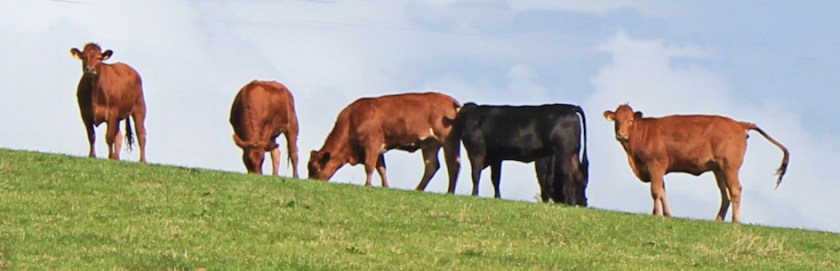
So, why is there a disconnect? Why isn’t the common knowledge of the medical profession – that cows are dangerous – shared by those organisations which should be closely involved in understanding the risks? As a general summary of the issues I will discuss in this article, this one aspect stood out from my research.
It seems to me that official organisations control statistics (such as they are) about cattle attacks and misuse the statistics which are available. The HSE and NFU cite the size of the cattle herd (9.8 million), and 300,000 farms, the predicted number of countryside visits by the public (2.93 billion) and the actual fatalities (between 1 and 2 members of the public each year, not forgetting 5 farm workers). Their inference is that the statistical likelihood of being subject to any cattle attack appears to be so negligible as to be discounted, and so preventative measures are a waste of effort.
In comparison, attention is drawn to 3 people killed by lightning each year and the 400 pedestrian deaths. Lightning strikes can be thought of as an Act of God, beyond even the scope of the HSE to control. As for the pedestrians killed by cars, I found a blog from Oil & Gas Safety which cites that 400 figure for pedestrian deaths (as well as 24,000 injuries caused by cars) of which 316 pedestrians were killed when crossing the road (assessed at 4 times a day). From this the risk of injury was calculated at 200,000 to 1. Needless to say, a lot of road safety engineering and car restrictions have been put in place to reduce the risks to that level. Remember that risk assessment (200,000 to 1) when it comes to considering cattle risks.
Given the figures cited by the HSE and NFU on the risk of cattle attacks, what is the problem? It can indeed be fairly claimed that the risk to the public appears remote in the extreme. But, if this is a non-existent issue, why were cattle attacks discussed in Parliament, why did a recent Coroner’s Inquest in Wiltshire call for a public debate, and why did my consultant talk about the “trampling season”?
It is worth digging into those figures to see if they reflect the real position.
Is the official and broad-brush comparison of numbers a valid approach or is it a matter of “lies, damned lies and statistics”?
This article considers the statistics by putting forward an alternative assessment for discussion. One purpose of this website is to set up a reporting system so more specific statics are available and so better judgements can be made about the risks.
Note: This article is primarily from the standpoint of a member of the public and not the farming industry, whose members are also at risk but who should be in greater control of the hazards.
BACKGROUND
By way of introduction, I will refer to some of the official pronouncements after the publicity generated when David Blunkett was injured by a cow.
HSE statement after cow attack
Tony Mitchell, of the Heath and Safety Executive, says that “Cattle are classed as a non-dangerous species and by and large are generally docile. Their inquisitive nature is often mistaken for aggression… when maternal instincts are aroused, then they may behave in a threatening manner”. This stock statement seems to be on HSE autocue. It is issued in almost identical form by other HSE spokesman after later attacks.
NFU statements after cow attack
An unnamed spokesman from the National Farmers’ Union gives the advice that if felt threatened “just to carry on as normal…. and remember to close the gate”. Another NFU person, Ed Rees, thinks it sufficient to “just take a walking stick …be bold and walk straight through them” and another suggests using a walking pole like a sword and stabbing the cow’s nose like a matador.
The passive and neutral terms used and advice given (and from my personal experience entirely optimistic and unpractical suggestions) are interesting and deliberate. Why not say what is actually the truth; that cattle can be dangerous.
The Animals Act, 1971, defines “dangerous animals” as “an animal not normally domesticated which if unrestrained could cause serious injury“. This definition appears to exclude cattle. But, the NFU is wrong in saying “Cattle are classed as a non-dangerous species.” Cattle are not classified as “non-dangerous”. They are just not classified as “dangerous animals” which is different in emphasis. A so-called non-dangerous animal is just as capable of inflicting serious injury.
When I was attacked…
When I was the victim of an unprovoked and coordinated herd attack by a group of cows, I was pleased to learn from the HSE that I was just mistaking the cows’ natural inquisitiveness as a deliberate attack. I was also told that the trampling was just a casual threat on the part of the cattle, because if the herd had intended to carry out their threat, then I really would have been in trouble!
Referring back to the NFU spokesman’s advice after the Blunkett attack: “just to carry on as normal…. and remember to close the gate.” I clearly did not follow his advice. Acting normally when being charged by a herd was not an option, and the furthest thing from my mind while being airlifted away from the field was to worry if I had left a gate open.
Neither did I “just take a walking stick …be bold and walk straight through them.” The walking stick I was carrying did not survive the first hit of the skirmish and although fencing at school may have helped me to take out one beast, the other 24 would have been beyond my skills.
The HSE and NFU spokesmen either knew nothing about the real nature of cattle attacks (in which case, why were they acting as spokesmen?) or their statements were deliberately misleading.
COUNTRYSIDE VISITS
Of the claimed 2.93 billion annual visits to enjoy the countryside, how many of those people actually encounter any cattle? What is the basis for that figure?
The 2.93 billion figure comes from one of the annual Natural England MENE studies into public visits to a natural environment, and has nothing to do with visits down to the farm. Natural environments include urban parks, the seaside, woods and similar, none of which is typically classed as cattle grazing land. For instance, visits to the coast include sitting in a car looking at the sea view or eating at a promenade restaurant, so I think from these caveats that juxtaposing a statistic including those activities against cattle attacks stretches credulity.
The closest most people will get to cattle will be sitting in the beer garden of The Bull public house.
But the MENE study has some points of interest. Of the total visits, it is assessed some 28% were to urban parks and 17% were on footpaths or bridleways which may be where cattle could be encountered. But within that percentage many footpath walks will also be in towns or on formal paths, forest or lake walks, rather than across farms. Even so, many farms are specialist arable or sheep farms, rather than for cattle. Cattle are not uniformly distributed across the UK. The predominantly arable areas of the south and east side of the country have lower cattle density than Wales, northern areas of England and south and east Scotland.
So, to use the figure 2.93 billion and imply that represents countryside visits is misleading. The estimated figure for public encounters with cattle is not a figure I can find.
CATTLE HERDS
There are 9.8 million head of cattle, and it is accepted that not all cattle are rampaging through the countryside causing havoc, and indeed most may normally be docile. But that is not really the issue. The risk posed by each cattle herd should be individually assessed, based against overall figures and similar cattle herds.
No insurance actuary assesses the accident risk of teenage drivers based on accident rates for 50-year-old women drivers. They look at peer-group statistics.
Using DEFRA (Department of Environment, Food, and Rural affairs) figures, it is estimated that 20% of cattle are permanently kept indoors, and will not encounter the public. Indeed, cattle are housed over 4 to 5 winter months and so any potential cattle encountering annual country visits should be reduced to reflect seasonal variation where cattle encounters are precluded.
The herd total includes a mix between dairy and beef cattle, bulls, breeding stock, young stock and calves. Just as for car drivers, each group presents different characteristics and risks. There are also different cattle breeds, farm management and handling methods which may incline cattle towards the docile or aggressive ends of the spectrum.
So a simple headline total is misleading for a complex mix of reasons and figures. The hazard and risk a cattle herd presents should be based on comparable herds, not a general total figure. You don’t equate and expect the same performance from a Porsche and a Ford Fiesta just because they are both cars.

CATTLE RISK FACTORS
What seems to be anecdotally accepted (although at this time statistics do not seem available to clearly evidence the point) is that within the overall numbers, there is a group of cattle which seem likely to behave far more aggressively than the common herd.
What are grouped as “continental” breed cattle, as opposed to traditional British breeds, are regarded as more unpredictable and less calm and docile in behaviour. Unfortunately, these more highly strung cattle also have a greater body mass and capacity to cause injury than British breeds.
These continental breeds, including Limousin, Charolais and Simmental, were introduced in the UK in the 1970’s and now make up much of the beef herd, although full figures are difficult to obtain. The British Limousin Cattle Society estimates that breed accounts for 32% of the beef herd and the Limousin gene is present in 75%. Interestingly the Limousin Society has an article setting out the efforts of stockmen to breed more docile cattle, which presupposes there is a recognised issue with the lack of docility in the breed.
Continental breed beef cows kept as suckler herds (cows with calves at foot) are regarded by the farming community itself as posing a particular risk of aggression. It is recognised that individual suckler cows that may otherwise be docile can change character because of maternal instincts with their calves, leading to protective and aggressive behaviour. As was given in expert evidence at the 2015 inquest into the death of Mr Porter “A farmer who puts a suckler herd in a field with a footpath is aware there is a high risk of attack to the public”.
That situation is made worse in those suckler herds that are extensively farmed and left to themselves. According to Defra, some 60% of such herds are on remote moorland areas where public encounters are rare. With little farmer and public contact, familiarisation with humans is limited.
ESTIMATING CATTLE RISK
According to data from the AHDB (Agriculture and Horticulture Development Board), of the total 9.8 million head of cattle, only some 1.57 million are breeding beef cows, of which I suspect most are Continental-breed suckler cows. Of these, 60% are kept in remote areas away from regular human contact, giving an estimated number of 942,000 cows who could be considered to pose the highest risk to humans.
So, by looking a bit further into the figures, and applying some simple risk analysis, the “official” headline risk of a public death of some 9,800,000 to 1 can be reduced to some 942,000 to 1.
But even that analysis is incomplete. The simple number assessment considering cows as individuals, and not as a co-ordinated herd, is wrong. Cows are kept in herds.
The majority of stories one reads about are whole herd attacks and not a single rogue cow. There may be one particularly aggressive, hormonal leader cow, with the rest just following to attack out of group cooperation and to protect the herd as a whole. But the lead cows may change as different individual cows go through different phases in the maternal calving cycle. Although it seems spring and summer predominates for calving, in fact calving occurs all year round.
With different cows each month feeling particularly maternal, and taking the aggressive lead, the whole herd is permanently on a war footing.
According to AHDB, the average size of a suckler herd is 27. If we take the 942,000 cows that pose the greatest risk (the remote-breeding, individual suckler cows), we can divide them into attack groups of 27. This gives us 35,000 potentially dangerous herds that can put an individual member of the public at risk.
In other words, the risk of a member of the public being killed by an individual herd is not 9,800,000 to 1, but more like 35,000 to 1. That risk can be referred back to the 200,000 to 1 risk for pedestrian fatalities.
CATTLE INCIDENTS versus CATTLE DEATHS
The official figures almost universally concentrate on fatalities. Death is indeed an inconvenience to the deceased, more so to family and dependents left behind. Less often discussed is the number of injured victims, which can range from potentially fatal but recoverable injuries, permanent disabilities, broken bones and simple bruising, down to mental trauma from situations where escape was made.
Those situations are less often discussed for the simple reason that it is difficult to get a grasp of the number in those categories.
Whatever the victim suffered, it can be assured that their future walking habits, and enjoyment of the countryside, will have been permanently altered and constrained.
One issue that official bodies seem not to understand or deliberately under-play, as exampled in the neutral and passive language cited above, is that all cattle attacks and incidents are potentially fatal. Being biffed by ¾ tonne of beef from a single cow is no trivial matter, let along being trampled multiple times by a herd. Once the herd shows “inquisitiveness” towards an interloper into their domain, the severity of injury suffered, or fortune in escaping unscathed, is simply a matter of luck.
Cattle do not think that they will just gently “threaten” one interloper to teach a lesson, but go harder on another. The herd intention is to eliminate a threat.
So, more numbers…
I have seen a Scoping Review about the risks of cattle to the public, based on media report searches over 20 years up to 2013. A figure of 54 attacks was found, of which about a quarter were fatal (13). So that gives some 41 media-reported injury incidents, or roughly 2 a year. That number seriously understates the issue because it is known from HSE that there were more injuries.
A BBC news report in 2009 (after the David Blunkett incident) gave a figure obtained from the HSE for the previous 8 years of 18 deaths (2 a year) and 481 serious injuries (60 a year). The 18 deaths is the figure usually reported for public deaths over the 15 year period up to 2013 (so clearly not the same statistic as in the Scoping Review above). I assume the 481 injuries just refers to members of the public, and not to farm workers. It is not known how serious those injuries were, but for the HSE to have been involved and recorded the injury number it can be assumed the severity was at the higher end of the scale.
The HSE concede that there is likely to be an under-reporting of injuries due to lack of awareness of the need for farmers to report a cattle attack injury as a workplace injury under RIDDOR.
Another BBC News publication from 2014 (Perils of the English Countryside) is aimed at the public and gives various figures for different animal and other hazards. I do not know the source of the figures but in the years between 2001 and 2011 the deaths from bulls is stated as 15, major injuries as 77 and injuries requiring treatment as 82. Equivalent figures for cows are 17, 362 and 328 respectively. So cows attack more, but maybe that’s because there are more of them.
These BBC figures give us a total of nearly 900 incidents. The total average annual figures are roughly 3 deaths, 40 serious injuries and 37 lesser injuries, but all of these 80 annual incidents had the potential to be fatal. Those figures are similar in magnitude to the HSE figures cited previously.
INCIDENTS WITH NO INJURY
But many incidents involving cattle and the public cause no specific injury. The member of the public escapes the field, or does not even enter, or with the benefit of a walking stick walks boldly through to scatter the submissive herd, closing the gate behind.
The numbers of those incidents is even more difficult to obtain. Subjectively, just as there is a multiplier between deaths and the greater number of injuries (x 25), so it is to be expected that the ratio of injury to escape would escalate.
After cattle attacks reported in the media, typically many comments are submitted by members of the public relating to similar personal incidents where they had a lucky escape.
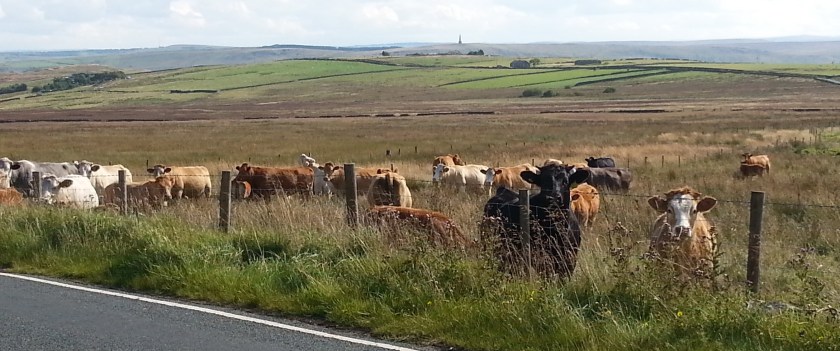
Ramblers have a Pathwatch reporting line for footpath problems and Ramblers have provided me with figures for 2015. The public logged 469 incidents where a path was “inconvenient” to use because of the presence of cows or bulls, and 114 incidents where the path was “unusable” because of cows or bulls.
These are not injury reports, just nearly 600 ramblers or countryside visitors who in one single year were sufficiently disgruntled to go to the trouble of reporting concerns because cattle in some way reduced or prevented their use of a public footpath.
SUMMARY
So make of these figures what you will. I am not a statistician and fault may well be found with my logic and methods, but I suggest fault can also be found in the logic and methods of official organisations which collate the statistics and partially represent conclusions drawn from those figures.
It is clear that the issue of cattle attack is not limited to a simple 1 in 9.7 million chance, and from such headlines as “Killer Cows” it seems the media and public are becoming increasingly aware that cattle incidents are relatively frequent and apparently becoming more frequent.
There are published figures available which give a glimpse of the overall extent of the hazard of cattle, which indeed merits a public or parliamentary debate. What is also needed is greater research and refinement of the figures.
You can help by reporting any incidents on this web site.
However, none of this further research should delay action being taken to reduce what is clearly a known and significant problem.
In later papers what improved action that can be taken will be discussed.
 Cattle Safety
I have never been particularly concerned by cows, other than I have no wish to disturb them. I don’t want them to get up and move because they are concerned by my presence in their field. So, I have devised a strategy to deal with them. Upon slowly and calmly entering the field and before I come too close to the cattle, I stop, and I start to sing.
Two things to bear in mind. First, I’m not talking about giving them some Scandinavian death metal type music; and second, I cannot carry a tune. Something calming and repetitive and easy with lots of dah-de-dahs for the bits where I have no idea of the words, and pieces that I can tunelessly whistle.
Quietly at first, but raising the volume until it attracts the attention of some of the nearest cows.
Being inquisitive, one of them will invariably come to investigate. I might turn side on and offer my hand for it to approach and lick, if it so desires. Eye contact can be made, but I don’t hold it for more than a second or two, that would be staring and that’s impolite.
As I work through my (limited) repertoire of, unrecognisable to mankind, tunes; more and more of the herd will come to investigate. I have never once been threatened by the cattle, the closest they come to aggression is against each other, when one tries to get closer to me than another and there’s a bit of a shoving match between them. I have yet to have the entire herd come to me but 20 – 30 cows is a typical audience.
One usually plucks up the courage to lick my outstretched arm at some point and, will doubtless have been disappointed to discover that I am not an edible strawman.
Being turned out into a field to eat grass is not the most enriching experience for an inquisitive animal like a cow. So, they stand and they listen, because I may just be the most interesting thing they have experienced in days. And, unlike my singing, that isn’t such a bad thing.
And when I’m done, I calmly, slowly walk through the rest of the herd on my way, occasionally one might follow me for a short while, but not in a threatening way at all.
Yesterday on my walk, one of the fields my path took me through, in addition to the cow herd, contained a large bull, servicing the ladies. I was unsure whether he would get antsy about me serenading his girls, so I opened with my version of Bring It On Home To Me, as soon as I was through, and still within easy reach of, the gate.
I soon had an audience of 3 and, from the corner of my eye, tracked the movement of the bull. Far from coming after me, he was striding, in that way bulls do, in a purposeful manner in th eopposite direction. Initially I was surprised (and somewhat relieved) that my singing, tuneless though it is, would drive him away so soon. It quickly became apparent that I was not the reason for his movement. No, no. He had espied Daisy who, until that moment, had been minding her business whilst taking lucheon in the shade of a large oak tree.
To the disappointment of no-one, I cut short my performance, it was the 3rd or 4th cow field of the day and my voice was giving out. I gave the oak tree a respectful berth; I had no desire to disturb the bull, who was now enjoying a post coital chew of the cud, and went on my way unmolested.
So, do I think singing is the secret to getting through a cow field unscathed? Absolutely not.
The point is that, just because man has decreed there is a right of way across the field, the cows, bless them, don’t understand that. Heck, they don’t even understand the concept of a field. To them, I am a potential threat walking amongst them, no matter how calmly or boldly I am moving.
For me, the singing/humming/whistling is simply a means to bring them to investigate me and discern for themselves that I am more likely the village idiot than a threat to them. At which point it causes them less anxiety when I eventually pass through the herd.
Chances are, one day I may be trampled by the cows, but in the meantime, I content myself with the knowledge that I may have enriched, if only a little, the lives of so many cows and would be my own fault for invariably singing flat in the chorus.
LikeLike
I’ve had several experiences with cows while out walking, so far unscathed. However even if the cows are not interested in me I still feel stressed until I get across the field, which can ruin a nice walk if I have to cross several fields with cows. My technique is never to run and if charged stand still, not look them in the eye and keep quiet, so far it has worked. Before entering the field I will try to assess the cows and have on many occasions not entered the field because of the look of the cows. A near escape recently was when I retreated back out of the field because I felt it was too risky. As soon as I closed the gate a group of bullocks ran down the hill stopping right in front of me, the ones at the back ran into the group pushing those at the front forward. If I had been on the other side of the gate they would have trampled me. I know this farmer doesn’t like people on his land as he has taken down sign posts so I doubt he cares much for the safety of walkers.
LikeLike
I had an incident a few years ago now. I had never seen a single cow in this particular field that I passed it pretty much daily. It was getting late on a Sunday evening (about half 9) after a walk so I decided to take the footpath through the fields to get back home. I crossed the 1st two fields with no issue, and the 3rd was the one that was ALWAYS empty. I climbed over the stile only to find there was a herd on the far side, about 300m away and they didn’t seem interested at all. I stupidly thought “I can make that” to get to the road. I’ve never been more wrong in my life. Half way across I had 15 of the cows run at me, and one started to throw itself about quite literally a foot behind me. The only thing that got me out of that field was staying calm and walking confidently (as I could in that situation) through them which was no easy feat. I stood there shaking on the other side of the stile knowing that I could have easily been trampled; no one would have found me until the next day given how late it was.
I’ve since developed a real fear of cows. Even if there are fences between me and them I have a hard time walking past. The problem is that I’ve since moved to another rural area and the cows are moved constantly so you never know what field they’re going to be in. Plus certain farmers in the area have now blocked footpaths with bulls. It feels like they actively go out their way to block walkers sometimes.
LikeLiked by 1 person
Thank you for sharing your experience, Becky. It’s terrifying how an everyday walk can suddenly turn into a life-threatening experience. Glad you escaped unharmed, but very sorry that this has interfered with your ability to enjoy countryside walks.
LikeLike
I’m really pleased I found this site. I’ve had many issues with cattle over the years whilst out trying to enjoy a walk and have become aware that they are an increasing problem. I won’t detail any of my incidents, I’ve never been injured and have always managed to either face them down or get away. Nevertheless, I’m more and more nervous around cattle and rightly so it seems. There are three answers to the problem that immediately present themselves: 1. stop visiting the countryside. 2. stop farmers putting cattle in areas where there are public rights of way. 3. everyone stops eating and drinking animal products. None of these will be acceptable to most people, and number one simply isn’t a real option. So I should think a combination of two and three would help improve the situation. Making sure that cattle deemed to present most risk (as outlined in Dave’s excellent article above) are excluded from areas where there are rights of way would be a great start. The stats as presented above are really quite shocking. Very few people realise how dangerous cattle can be. It would be interesting to see stats for incidents that don’t involve dogs. For example I once had a particularly frightening incident with a pram.
LikeLike
Thank you for your comment. The pram incident must have been nerve-wracking for you (I assume you had a baby in the pram!). As you know, we are pushing for walkers to be separated from cattle wherever possible. Agree that most people simply aren’t aware of the risks. If you have experienced any recent near miss events, please do consider adding them to our database. Hope you continue walking safely in our amazing countryside.
LikeLike
Hi Ruth, yes, a baby was in the pram! If I hadn’t have had some experience with cows we would have been a news item and a tragic statistic.
LikeLike
I’ve always been scared of cows, since I was about 8 years old and was chased by them with my cousin and a friend.
I’m a regular walker though and have been on a fair few walks with my boyfriend, where he had supported me with my fear and helped me walk through any cow fields.
Recently, I’d finally plucked up the courage to walk through fields with cows in them, alone.
About 3 weeks ago, I was walking through a very crowded field of cows and it’s safe to say I was extremely nervous, I could feel my heart racing but decided to just very slowly make my way through them, without eye contact.
I was right near the end when I noticed one cow look at me, and then all of them started to look at me. For a moment I was still, and was terrified that the whole herd was just staring at me, and then that’s when they started to run towards me. I was in very close proximity to them, so my only option was to run, as I was acting off instinct.
I ran, and knew they were still chasing me and got to a barbed wire fence, and without thinking I instinctively tried to hurdle the fence to escape the cows. Although my right leg and body managed to clear the fence, my left leg got tangled and resulted in being stuck in the fence, whilst I lay on the floor. I had to literally rip my leg out of the barbed wire, resulting in flesh being ripped from thigh and groin.
Not only did my thigh get quite severely damaged with lacerations, I suffered deep soft tissue damage which turned my whole thigh black, blue and severely swollen.
Whilst I was on the other side of the fence, the cows had all crowded round and were still right up next to the fence, and were there the whole time until the ambulance got there. Luckily the farmer was there doing the rounds and found me so was able to help me direct the ambulance, else it would have been very tricky to locate me!
LikeLike
Hi Joanna, so sorry to hear this happened to you. It must have been terrifying
.Thank you for sharing your story.
LikeLike
I live on a Scottish island where most cows & sheep graze unfenced. I’ve only become wary & indeed, scared of cows in the last couple of years as there have been increasing attacks on people on the island.
I make a point of avoiding fields & areas where there are cows but sometimes they turn up in unexpected places. Recently, my sister & I had enjoyed a long walk along a beautiful beach, crossing a couple of shallow rivers en route. We stopped to eat our packed lunches among the sand dunes. As we got to our feet to start our return journey, we saw a herd of cows walking along the sand in our direction. When they spotted us, they broke into a trot!
What alarmed us most was that we were several miles from our cars & there were no fences in sight. Only the sea on our right, boggy peatland on our left & the wide stretch of sand we were hurrying along. The herd behind us were picking up speed. It was almost like they were looking for some sport! We were getting anxious as they were gaining on us. We ploughed through a couple of rivers without bothering to take off our shoes as we had when we first crossed them. At last we could see a barbed wire fence in the boggy dunes up ahead so darted for that. The cows still didn’t let us off the hook. They shadowed us from the other side of the fence, looking for a way in to reach us.
They followed us for about another 2 miles forcing us to navigate bog, tussocks & river-crossings. Being in our 60’s & not super-fit, it was a very alarming experience. The cows shadowed us all the way back to our cars & thankfully there was still a fence between us. When we knew we were finally safe, we stopped to count them. There were almost 40!! So sad that we will be too afraid to walk along that stunning beach again.
LikeLike
A frightening experience. A shame that this delightful beach has become a hazardous place because of the cattle. Thank you for sharing your story.
LikeLike
I live next to Silchester Common, near Tadley, Hants. The Common is used to graze cattle and has been for hundreds of years. Like many locals, I’ve been using the area for walking/exercise for years without incident, giving the cows a wide berth as I’m usually with my collie. I know of some incidents where cows have been attacked by dogs, which is awful. However, I was unaware of any cows bothering people, until yesterday! I was walking through the Common with my dog, when I heard loud ‘moos’ from a distance (over the sound of my podcast). I saw a herd of cows, probably about 500m away, running towards a man who was walking to my left. The cows were still away off behind him and I speculated that he might be the farmer and they were running for feed, as I’ve seen them do on telly. I never thought anything more of it until I’d done a bit of a loop and approached the spot where I’d seen the cows 10 minutes earlier which was on my usual route home. Again, I heard loud moos and saw cows off in the distance blocking the path, no calves in sight. I doubled back on myself, opting to take another path that runs parallel to the one I was going to originally take, again as I’d done a thousand times before. I came level with the cows as I headed toward the exit gate, which was still a good 500m ahead of me. The cows, about 15-20 of them, were about 500m away to my right, which felt a more than safe distance, given I’d walked by much closer in the past. It was at this point I saw the herd point in my direction and heard more loud, angry sounding moos. I kept walking, trying to remain calm as they started moving forward towards me. They then broke into a trot and it quickly became clear they were running at me. This was so unexpected, which sounds daft, but I’d never had any issues previously. They were scarily fast, given their size, and quickly gained on me. I knew about staying calm, still etc, but was still far enough away to think I could make a run for it, so I did. They were now running full tilt and got to within about 5-10m of me and then, all of a sudden, slowed off. I kept running until I couldn’t any longer (I’m 45, not that fit, and didn’t know I had a sprint left in me!). Miraculously, the cows decided I wasn’t worth bothering with any more. I kept moving, all the while looking over my shoulder and had to find another exit on the other side of the common, adding an hour to my lunchtime walk. I warned a family of 4 of what had just happened as they were walking in the direction of the cows. They reported that their daughter had also been chased by “edgy cows” on the Common recently, which had terrified her too. They also took another route. It was a close call/near miss, and I’ve never felt panic like that for a long time, but nowhere near as bad as some of the other accounts I’ve read (including in the BMC post). But it was nonetheless a terrifying experience. If I was an older person, or a mother with a buggy, I have no doubt I’d have been physically attacked and would have no chance against these large cows. Children, parents with buggies and the elderly all regularly use the Common and this worries me a lot. It is their home, I get that, but I feel there should be more signs on gates warning of the dangers of cows.
LikeLike
I’m sorry to hear of your frightening experience. Glad you escaped unharmed. There must be a committee or an organisation that oversees the use of the common, so might be worth reporting this.
LikeLike
You should be on twitter.
LikeLike
We are!
LikeLike
https://www.dailymail.co.uk/news/article-10398357/Army-veteran-55-left-life-changing-injuries-trampled-herd-cows.html
When will HSE finally accept they have a responsibility to address this problem?
LikeLike
100% agree with the article. I do a lot of walking, usually with my dog. A few years ago was chased out of a field by young bullocks….made it after dropping the lead and the dog knew it needed to move! Been sensitive to the issue ever since always moving along field boundries, although this may not be the official path, always look for a an exit, try to keep out of the cows eyeline if possible, hiding the dog behind our legs hoping it will go unnoticed….it’s all a bit unnerving.
Some farmers manage the situation well but others don’t and I sometimes think they place cows deliberately in fields with a footpath. (opinion!) Footpaths are a right of way and they need to be maintained and treasured. I’m all for farmers making a detour if it makes it safe and manageable for all.
Stay safe and wary!
LikeLiked by 1 person
I was with two friends crossing a large field in Staffordshire with around 40 cows they all seemed docile until we were half way across and one cow started to run at us and then others joined in they were trotting right behind us and we could here the hooves- then some others can running across to join – we were all petrified. We did not run just continued to move fast but steady but I did think I was going to be trampled as I was at the back nearest the cows. For some reason they just stopped chasing us and we got out over the style but it was very frightening seeing c. 10 cows running after one with a distance of about 2 metres between you and the front runner – I will never cross a field of cows again. The cows where heifers
LikeLike
I’m so sorry. That must have been terrifying.
LikeLike
Always carry some wire cutters – often makes navigating past fields with “inquisitive” cattle easier if there is no barbed wire in your way.
LikeLike
I agree that there should not be a conflict between farmers’ herd management and the public’s use of public rights of way without fear and risk. In rural Northumberland I am surrounded by cattle in fields, on land owned by the National Trust, and even in the cheviot hills, part of the NP. Daily in summer I have to avoid certain paths and fields. With some footpaths going through huge fields, this isn’t always practical or predictable. I am sick of people telling me just to wave my arms and shout at a herd of bullocks, apparently harmless. I don’t care whether it’s aggression or just mere curiosity, but I don’t stand a chance against their bulk, stick (always with me) notwithstanding. Some of the barbed wire fences mentioned above are so close to the wall that they offer little protection, and more of a risk of ripping your clothing or worse. Only in the winter months do I dare explore more, but always on my guard. Cows with cattle can be found anywhere, all year round
LikeLike
Robert Gingell: As a farmer I`d say you were being helpfully informed of the animals in the field. I`d be in favour of as much information as possible on the gate, but probably not practical to educate people with little knowledge of the countryside there. As stated in the article the situation is constantly changing with cows placid most of the time but when hungry, bothered by flies & heat, dogs etc things can change quickly. Even our docile Herefords have once(that I know of) stampeded a relative thru a hedge as they thought we`d come to feed/move them. It`s nice to have people enjoy our fields, on the footpaths/bridleways but not if we can`t graze them, plus dogs off leads..big sticks etc left in the grass, dog muck(disease), horses trampling the soft ground in winter, people interfering with fences, trespassing off the paths..a constant worry & nuisance. I`d like to say people should take some responsibility for being wary of large animals & farmers should not put the more dangerous ones on footpaths. I`d like to know the stats on different breeds involved. I`ve plenty of serious stories! I think horses & dogs are more dangerous. There`ll be little safety if the rewilders bring back wolves & bears
LikeLike
I got chased a few weeks ago. I’ve walked in the same field through the same cows for years, but, this day they gave chase. We hid behind some trees, called the police and then managed to edge out of the field. We were terrified. The next day the news sadly reported that someone had lost their life – trampled to death by cows. I will never knowingly walk through cows grazing again.
LikeLike
Sorry to hear this, Vicki. Glad you escaped without injury.
LikeLike
I do think there must be loads of incidents which are never reported. Must admit am guilty of this myself. Have had a few scares with aggressive cows over the years, escaping in one piece…But scared ! It’s understandable that you just want to finish a day’s tramping and get home, and can’t be bothered informing police or whoever you’re meant to contact. I’ve resolved that in future, if anything like this happens to me again, Then I will go out of my way and report it. I urge everyone else out there to do the same. It could save a life!
LikeLiked by 1 person
I’ve come upon fields, crossed by a public footpath, where the farmer’s erected sign/s warning of cows with calves, and/or bullocks. It seems to me that this is admitting to knowingly creating a danger to the public, which in itself would be an offence! Or so you’d think!
Wouldn’t you think that placing signs which cause people to be afraid to use a public right of way would be the equivalent to causing an obstruction?!
Some time ago, a Huddersfield man was given jail-time because his dog killed a pedestrian who was walking along a pavement. Could that dog owner have avoided responsibility by sticking (dangerous dog) warning signs along the street?!
I hope these farmers get jail-time, and then get sued, if necessary to the point of bankruptcy!
LikeLike
I was walking on a footpath in Northumberland, with my husband, in June 2000. I’d never been scared of cows and had frequently walked on footpaths through fields with large herds. They usually ignored walkers but I was well aware that they could be curious though had never known them to be aggressive. We suddenly heard a loud mooing, and saw a cow lowering its head and swinging it, then beginning to run at us. We ran into a group of trees and the cow gave up the chase. Since then I have been wary and have noticed cows becoming increasingly curious, even aggressive. There are far too many paths with cows on and far too many accidents, near misses and fatalities. It may be my imagination but bullocks seem much bigger than they used to be. Where I live some farmers have put up wire fences between the field and the walls/hedges where the footpaths run. This seems to deter the bullocks – they come up to the fence and look but do not try to get through. This feels much safer.
I have been horrified reading these stories. Dog attacks cause major headlines- cow attacks not really. Yes it is farmland but footpaths are rights of way and we must be able to walk them safely. A sign is no protection – time for effective action.o
LikeLike
I am constantly rerouting, climbing walls, scrambling through bushes to avoid them and this can be 3 times on a walk. We have been chased by them. Why can’t farmers put up temporary fences to keep walkers and cows separate. This problem makes me anxious and spoils my walks.
LikeLike