The Way Forward – a message for land occupiers

This is an article that was published in Farmers Weekly and written by one of COWS members, Dr Jerry Alderson, who was asked to write it after appearing on a Farmers Weekly podcast.

Imagine this. You are in your local town, about to use a footpath across a patch of grass which you have used many times before. At the path entrance is a new sign stating ‘DANGER’. There is no explanation. The path was never signposted. Neither has it been closed. No alternative route is offered. What would you do?

Surely the local council would keep you safe, if they were concerned? Is this a hoax? You may feel frustrated that your way is effectively blocked by a danger you cannot see and don’t understand. Would an alternative route take you into more danger, or on to private land? Should you risk it, or walk away?

This may seem far-fetched, but walkers in the countryside are faced with dilemmas like this every day.

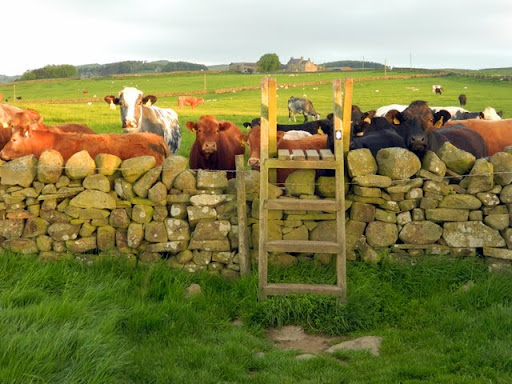
Bull warning sign, but it was the other cattle that caused the trouble

Rights of way are exactly that – a RIGHT to pass. Nothing more, nothing less. These highways are often ancient, predating the enclosure act and private farmland as we know it.

I am a former farm-worker, now a GP, landowner and lifelong walker. I am a staunch supporter of British farming and the need to strengthen and improve UK food self-sufficiency. I believe that these two interests can peacefully co-exist.

Farms can be dangerous – look at the annual death toll published by HSE. Whilst a land occupier (owner or tenant) may not automatically owe a duty of care to users of a right of way crossing their land, any injury to such a user resulting from negligent or dangerous practices could lead to prosecution.

It is an OFFENCE to block or even discourage the lawful use of a right of way. Non-specific warning signs implying ‘danger’ could be used by unscrupulous occupiers to discourage use. Regularly keeping cattle in fields crossed by a right of way without any form of mitigation of the potential danger – fencing for example – seems reckless. Recent research published by killercows.co.uk shows that ALL cattle have the potential to be dangerous despite current HSE guidance.

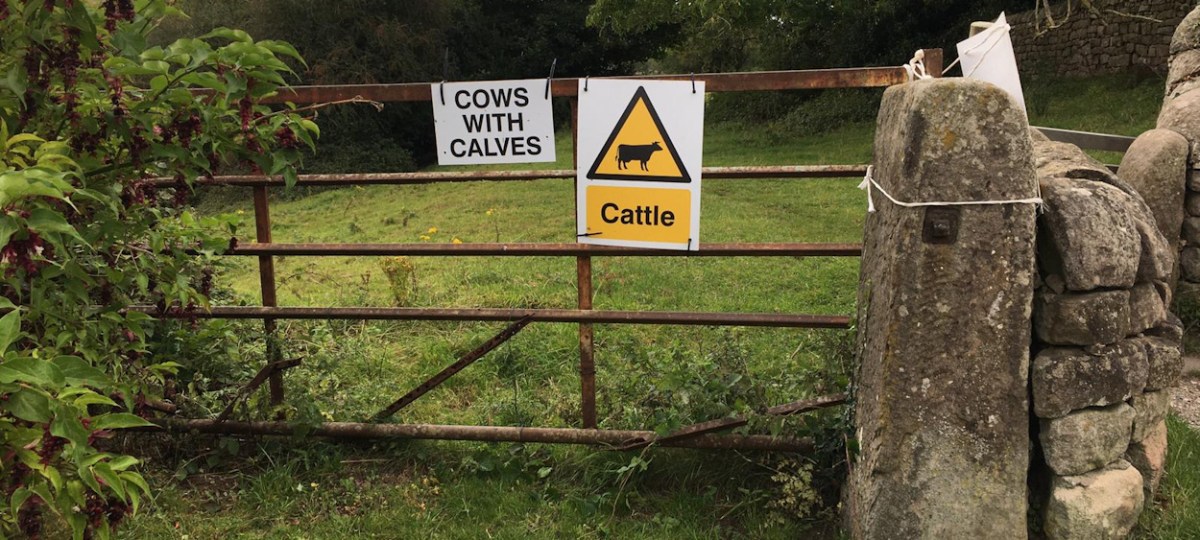
New signs warning of dangerous cattle after the attack

Making it difficult to use a right of way so that it falls into disuse does not remove the right of way and will likely lead to walkers finding their own, less suitable, way across your land.

Most walkers do not intend to trespass, damage crops or injure livestock. But neither do they have the in-depth appreciation of the potential dangers on your farm that you have. Subconsciously, they are relying on the presumed professionalism of you, the land occupier, to keep them safe by identifying or mitigating any dangers. ONLY YOU CAN DO THIS.

Most land occupiers do not want the death or injury of a member of the public on their conscience.

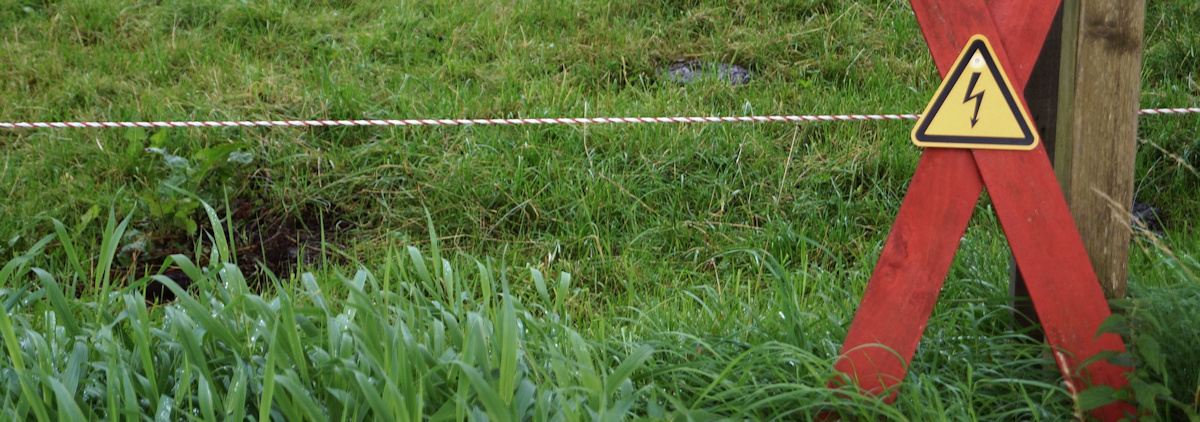
Wouldn’t it be in everyone’s interests to assist walkers to move efficiently and safely along rights of way crossing farmland, by ensuring that signposting is clear, unambiguous and undamaged, paths unobstructed and gates and stiles well maintained? Clearly identifying dangers adjacent to paths, such as working machinery and slurry-pits, also makes sense. Where fields containing a right of way regularly contain livestock – the erection of a stock fence keeps livestock away from people, and dogs away from livestock. For temporary separation of livestock and people, an electric fence may be more versatile.
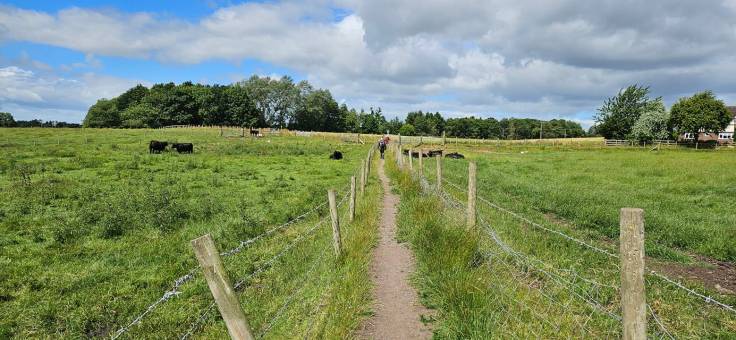
If you are not responsible for footpath maintenance on your land, suggesting these measures to the relevant authority would make sense. You know your land better than anyone, after all.

Returning to our original scenario – how useful do you think a sign saying ‘bull in field’ really is? It neither removes the danger nor offers an alternative. SURELY, WE CAN DO BETTER!
Effective Fencing Options for Farmers: separating cattle and walkers

We discuss how to safely accommodate walkers where public rights of way cross cattle-grazed fields. We emphasise the importance of separating cattle and people, explore fencing options, highlight the advantages and limitations of electric fencing, and suggest how farmers can avoid unnecessary expense.

How can walkers be safely accommodated where cattle graze on fields crossed by public rights of way (PROWs)? Read our summary, or download our full briefing letter for farmers / landowners.

Continue reading “Effective Fencing Options for Farmers: separating cattle and walkers”

Gentle warning and reminder that cows will be returning to pasture!

Cattle have been housed inside over the winter months so have been absent from our walks. In the spring when the weather gets warmer the grass starts to grow and the cattle can go back out into the fields. After the cattle have been housed indoors for a few months they are very excited about being allowed back out in the field so they run around doing laps of the field kicking their legs in the air.

So a reminder that your regular walks may now have cattle in the fields so be vigilant.

Also, like us (or not!!), they may be frisky in the Spring and exited to get back outside. They are large animals and unpredictable, so again be wary.

Spring also means calves which, although cute means that their mothers will be protective so keep clear and be wary

Yes – cattle should be respected!

We should respect cattle – the fields are their home. But how do we do this when a public right of way exists?

Written by one of Killer Cows Team.

A recent television programme on ITV infuriated one of our reporters as we were told we should “respect cattle, the field is after all, their home”. The suggestion being that walkers were doing something wrong when they walk across fields.

Here is a clip of the TV programme on Instagram: https://www.instagram.com/brinkworth_dairy/reel/DCpkaAXocL-/

We have seen this sentiment with requests to not park on grass verges where sheep graze as it is “their lunch”, and similarly on fields where cattle graze. When there is no public right of way, or no right to roam, we can understand these requests and can comply with them.

But, there is a problem with introducing this concept into a field which does have a public right of way (PROW), or right to roam. We can respect the fact the cattle feel this is their space, and may feel they or their calves are threatened by walkers. Sometimes, cattle are simply inquisitive about someone in “their field”. But, we walkers have a right to walk along a public right of way, and we are unable to do anything reliable to stop cattle acting on that feeling in an aggressive or boisterous way.

Aggressive and boisterous cattle can result in serious injuries for the walker. We have many examples of walkers doing everything “right” and still getting injured.

The people who should be respecting cattle’s feeling of ownership of their field are their owners.

Farmers can either avoid placing cattle in fields with a public right of way (PROW), or provide a barrier to separate walkers from the cattle. By providing a barrier, they would be keeping walkers out of the cattle’s home. This is often done on the Continent with well applied electric fences to which the herd has been introduced.

The electric fence can be moved for grazing purposes where public footpaths cross the middle of a field.
If the path follows the edge of a field, the farmers can either fence it off, or offer a temporary alternative footpath on the other side of the hedge (accepting that this path would have to be temporary as a public right of way cannot be deliberately or permanently re-routed). If there is a long term plan to have cattle in a field with a right of way, then fencing is more appropriate than rerouting.

Image by Hedy81 from Pixabay

So, yes, let’s all respect cattle, and recognise the fact that they find walkers an intrusion into their domain. Farmers can solve this by providing fencing to separate cattle from footpaths, and so create a feeling of security for their animals.

Walkers should not have to pay the predictable price, or be blamed repeatedly, for farmers lack of respect for the security of their own cattle.


I want the people in your country to know that this is happening in the US also.

Incident number: 994

Response ID: 307,193,852

Date of incident: 15.06.24

Location: Alhambra Creek Staging area of Briones in East Bay Regional Park in California (The East Bay) 

Status: Loan walker no dog on PRW

Mary’s story

“A calf started after me after he was butting heads with his buddy. He decided to do it to me. This has happened frequently with adult cows as well. The cows get all over my path, the fire road, as well as the field where they graze. I therefore have no other place to walk. I go slowly but they don’t care and they charge. The cattleman does not manage his animals at all!”

Mary wanted to warn us of potential US dangers – but cows are cows which ever country you go to – so be careful wherever you travel!

Walkers and Farmers – we can help each other.

We all know that feeling, looking at a map of an unfamiliar area, trying to plan a route. Walkers enjoy the freedom that access to our footpath network gives them; most walkers are careful to respect the farmer’s land and often help keeping the footpaths clear, they can notify farmers if livestock are lose or look ill. Well tended farms with farmers following HSE guidelines help walkers. We all get to enjoy our beautiful countryside.

Continue reading “Walkers and Farmers – we can help each other.”

Avoidance seemed the best strategy

Incident number: 848

Response  ID: 302,184,681

Date: 09/05/24

Location: Wiltshire- Walking from Barbury castle to Ogbourne St George and then back along the Ridgeway.

One Ridgeway walker recalls : “As my dog (border terrier) and I entered the first field along our route, we saw a group of about 20 cows ahead of us but to the left. I decided to keep our distance and walk tightly along the fence line. My dog was quite interested in the cows and wanted to go in their direction, so she was kept on a very short lead. The cows then noticed us and started walking towards the fence line ahead of us, then towards us. They seemed very curious and like they would keep coming at us if we’d stayed the course. Whilst stood facing the cattle, deciding what to do (should I turn my back? Should I go quickly or slowly? Could I jump over this barbed wire if I had to?) the cow nearest us started tail flicking and snorted- I knew this was not a good thing! So we ended up walking back on ourselves slowly, then far down and across the field out of their sight. Then, on the return leg of the journey, in a different field, the adult cows this time first stopped and stared and then all made a beeline for the gate ahead of us we needed to go through! The whole herd congregated there. I’m not sure if they were expecting it to be opened so they could go through? Again, we had to hike far up and across that field, then probably trespass into some other fields (under an electric fence, over a locked gate) to get back onto the Ridgeway.”

On the Bures Dragon hiking loop. Jennifer and her friend remained calm

Incident number: 838

Response ID: 301,224,274

Date: 13.04.24

Location: Bures, Suffolk. Between Smallbridge and Bures Road on the St Stephen’s Chapel, Bures Dragon hiking loop.

Jennifer said that two of them had been walking in the above location with no dog. In her words.

“Cows came quickly over from the other side of the field, surrounded us coming very close and were clearly agitated – they started to paw the ground. At this point we calmly turned around and walked to the gate we had entered by. (had we not been able to do this I believe we would have been injured.) We ‘done’ all the right things – no sudden noise or movements and we stayed next to the fence line whilst walking.”

Jennifer wants “Clear signs ‘ not to enter’ or where possible, an alternative route provided by farmer so no one gets hurt or scared ( including the animals)”

Can We Enjoy a Walk in the Countryside?

You may have heard Adrian Chiles’s radio programme discussing the safety of walking through fields of cattle, if not then head this way – Adrian Chiles – 04/04/2024 – BBC Sounds . Neither the animal behaviourist nor the representative from the NFU on the programme arrived at any conclusions about how we should behave to avoid being attacked by cows. So we ask the question – can we enjoy a walk in the countryside?

This all began because we love walking in our beautiful countryside – and it’s good for us.

The benefits of walking

Natural England has updated the Countryside Code, recognising the significant health and wellbeing benefits of spending time in nature. These benefits are important. England and Wales are blessed with a wonderful network of footpaths, allowing everyone access to our countryside so they can enjoy the benefits to both mind and body that walking in natural surroundings can bring.

But: Killer Cows have received over 800 reports of incidents in the countryside, these are from walkers who have either felt scared or been chased by cattle or, even worse, sustained injuries from cattle – some very severe. Many have been so affected they no longer feel safe enough to walk in the country and so have lost any benefit access to the countryside gave them.

So what do people suggest to do to keep safe?

Continue reading “Can We Enjoy a Walk in the Countryside?”

“What do I do if I meet cows on my walk?” Safety Advice from The Ramblers, NFU and The Kennel Club (and what farmer’s are advised to do to keep us safe.)

A few of our reports have had people say they were unsure of what they should be doing if they meet cattle on their walks – so Killer Cows has had a look at the latest posts from these Organisations and listed them. We are not saying doing this will keep you safe – we’re saying this is what they are telling us.

Happy walking.

The Ramblers states cheerfully: “Whatever animals may be in the field, follow our top tips and you’ll be unlikely to run into any issues.”

  1. Have a look when you reach the edge of the field. Are there any cattle in the field, any cows with calves, horses, or sheep? Cows with calves are the most common cause of problems for walkers.
  2. Keep a good distance from the animals. If they are on the path, then you’re allowed to go off path to walk around them. If you are on open access land, then you can walk across the field to give the animals space.
  3. Walk quickly and quietly. Animals in a field may approach you, especially groups of cows which can be quite intimidating. If you panic, or run from them, they may also start running.
  4. Do not approach any animals, do not feed them, or touch them. Animals on a farm will have strict diets, especially horses, and feeding them can be bad for them.
  5. Leave any gates as you find them. Close any gates that you open, and if any gates are open, then leave them that way.

The National Farmers’ Union & Lake District National Park have issued a joint safety advice reminder.

  • “Cows with calves will be protective of their young so you should avoid getting too close. If you mistakenly do, then please don’t make a run for it, move away slowly. Don’t turn your back on the cattle and don’t make eye contact as they can find this intimidating.”
  • “The countryside code advises that dogs should always be under close control around livestock but if you are feeling threatened by cattle the advice is to drop the lead to allow your dog to run away.”

The Kennel Club: How to keep yourself safe

  • Stop, look and listen before entering a field; be aware of any cattle present
  • Always keep your dog on a short lead around cows and any other farm animals
  • Find the safest route around the farm animals, giving them plenty of space; divert of the marked path if you need to. Never walk between cows and calves.
  • Exit the area calmly and quickly if threatened, releasing your dog to make it easier for you both to reach safety separately.
  • Remember: while you can often see signs telling you to stick to paths and keep dogs on leads around all farm animals, such rules do not apply when you are trying to protect yourself from injury.
  • While picking up your dog may feel like the most natural thing to do when threatened by cattle, this can make you more likely to be injured.
  • Do not hesitate to let your dog off the lead if you are threatened by cattle and take the quickest route out of danger, even if this means not using an official path.

Health and Safety Executive advice for farmers:

  • No dairy bulls should be kept in fields with public access at any time.
  • Where possible, avoid putting cattle, especially cows with calves, in fields with public access.
  • Where there is a need to keep cattle with calves, or a bull in a field with public access, do all that you can to keep animals and people separated. Consider the use of fencing (permanent or temporary eg electric fencing). This is particularly important at busy times, or where access routes are heavily used.
  • Assess the temperament of any cattle before putting them into a field with public access.
  • If cattle, especially cows with calves, do need to be put into fields with public access, keep this period to a minimum.
  • Position feed and water troughs away from public access routes and away from public entrances and exists to the field.
  • Put in place a system to monitor any cattle in fields with public access at least on a daily basis. It may be worth recording this.
  • Consider culling any animal that shows signs of aggression.
  • Any animal that has shown any sign of aggression must not be kept in a field with public access.
  • Clearly sign post all public access routes across the farm. Display signage at all entrances to the field stating what is in the field (cows with calves/bulls).

David Gosling: lessons learned

Be vigilant. Give cattle a wide birth. Provide notices…

On the 20th of August, 2021, I was knocked down and badly injured by cattle, as was my friend Tony. I describe my experience here: David Gosling’s story: knocked down and tramped on

Continue reading “David Gosling: lessons learned”