
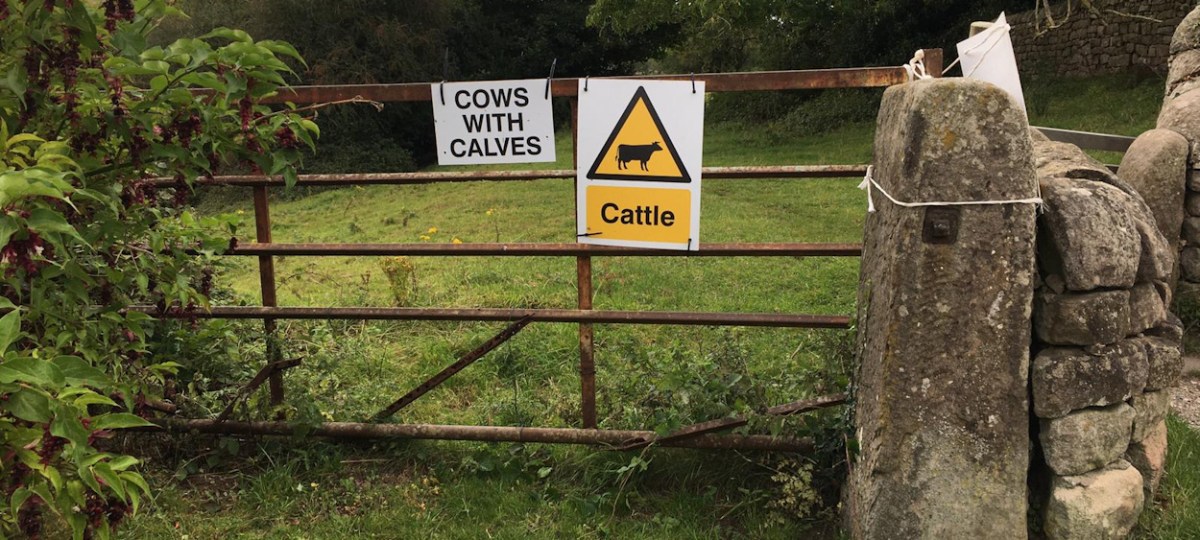
We all know that feeling, looking at a map of an unfamiliar area, trying to plan a route. Walkers enjoy the freedom that access to our footpath network gives them; most walkers are careful to respect the farmer’s land and often help keeping the footpaths clear, they can notify farmers if livestock are lose or look ill. Well tended farms with farmers following HSE guidelines help walkers. We all get to enjoy our beautiful countryside.
One of our followers, Anne, has shared a couple of photos from her walks and has been kind enough to describe the fields and walks across both areas.

“This picture is of fields between Newport & Edgmond, Shropshire, north of Telford. Fences are here to protect livestock from off-lead dogs too, sheep are often here and sometimes bullocks. Fences work both ways, they help protect the stock from dog attacks and potential parasites in dog faeces and they safeguard walkers who can be fearful of walking through cattle. Not everyone is happy to walk a minimum recommended width barbed wire corridor, but it serves a purpose to protect livestock as well as protect walkers and maintain a clear PROW line through a big grazed area.”

“This photo is a field near Broseley, Shropshire, containing a bull and young calves and heifers ranging over the public right of way (PROW), sheep are often present here but in summer it’s usually cattle, sometimes both. No incidents have been reported in this location, but a scene like this is always a worry for me when I walk it (I lived near here till recently and it was a favourite walk) and any sign of a cow looking nervous and interested in me with a calf at foot I don’t go further along this PROW, especially with Limousin or cross breeds. I try to assess if they look as if they are a threat. It’s a big field and the cattle are sometimes not near the right of way and sometimes it’s just a herd peacefully grazing with no calves or young bullocks /heifers but it always makes me think, are they used to people or not? There is no easy escape route as there is a barbed wire fence surrounding it. Once when we walked this area we found a big lamb stuck fast trapped in the wire fence, it took two of us 20 minutes to release it as the wires were very stiff and its head needed careful rotation. Not the first time on a walk we have rescued a sheep or lamb on its back unable to get up, or stuck fast in a fence or other obstacle, or reported an injured animal, walkers are not always a ‘problem for farmers’.”
Recently Libby from Killer Cows was walking with a group in North Buckinghamshire, ” we came to a large field containing a group of bullocks, the right of way crossed through the middle of the field and the cattle were all gathered around the far stile. We met the farmer at the gate cutting back foliage to improve our access to the field, ‘thank you’, we said. We asked if his cattle were safe for us to walk near, he then said he was going to feed them and would bring them to the opposite side of the field so we could get past easily. The farmer did this without sneering at my timidity with cattle – I was extremely grateful. I realise this only works for other cautious walkers if that farmer is there – but there was an understanding of why we were nervous and that felt really good that that member of the farming community understood.” So farmers are not always a problem for walkers either..
 Cattle Safety
I share the view that walkersand farmers should work together and find solutions, rather than being at loggerheads. I’ve often gone out of my way to try to find a farmer if I see a sheep or cattle in a bad way. However, the legislation is unlikely to change, for now… if ever.
Two observations I want to share: 1. interestingly, I find increasingly more understanding among farmers in Northumberland about our weariness of cattle, than dismissal. They even recommend not to enter a field with cows. Has anything changed over the years? 2. Anybody who has seen the Chillingham Wild Cattle herd (highly recommended!) would have been struck by how relaxed these cattle are towards humans, especially the cows, who seem totally unfazed by the groups of visitors coming into the field with a guide. It made me think: how come these cattle, left to their own devices and totally undisturbed, are so relaxed? By contrast, can we blame our domestic cows, who get their calves removed -among other interventions- for being protective/aggressive towards any human who just happens to be passing by?
LikeLike