

This is an article that was published in Farmers Weekly and written by one of COWS members, Dr Jerry Alderson, who was asked to write it after appearing on a Farmers Weekly podcast.
Imagine this. You are in your local town, about to use a footpath across a patch of grass which you have used many times before. At the path entrance is a new sign stating ‘DANGER’. There is no explanation. The path was never signposted. Neither has it been closed. No alternative route is offered. What would you do?
Surely the local council would keep you safe, if they were concerned? Is this a hoax? You may feel frustrated that your way is effectively blocked by a danger you cannot see and don’t understand. Would an alternative route take you into more danger, or on to private land? Should you risk it, or walk away?
This may seem far-fetched, but walkers in the countryside are faced with dilemmas like this every day.

Rights of way are exactly that – a RIGHT to pass. Nothing more, nothing less. These highways are often ancient, predating the enclosure act and private farmland as we know it.

I am a former farm-worker, now a GP, landowner and lifelong walker. I am a staunch supporter of British farming and the need to strengthen and improve UK food self-sufficiency. I believe that these two interests can peacefully co-exist.
Farms can be dangerous – look at the annual death toll published by HSE. Whilst a land occupier (owner or tenant) may not automatically owe a duty of care to users of a right of way crossing their land, any injury to such a user resulting from negligent or dangerous practices could lead to prosecution.
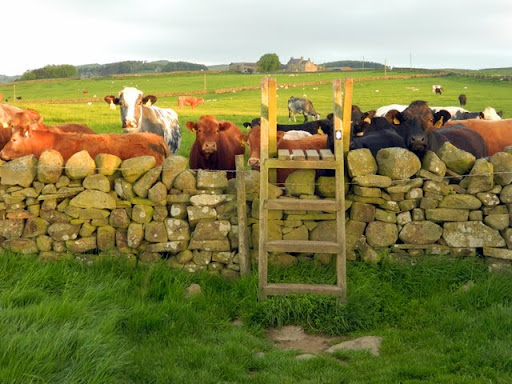
It is an OFFENCE to block or even discourage the lawful use of a right of way. Non-specific warning signs implying ‘danger’ could be used by unscrupulous occupiers to discourage use. Regularly keeping cattle in fields crossed by a right of way without any form of mitigation of the potential danger – fencing for example – seems reckless. Recent research published by killercows.co.uk shows that ALL cattle have the potential to be dangerous despite current HSE guidance.

Making it difficult to use a right of way so that it falls into disuse does not remove the right of way and will likely lead to walkers finding their own, less suitable, way across your land.
Most walkers do not intend to trespass, damage crops or injure livestock. But neither do they have the in-depth appreciation of the potential dangers on your farm that you have. Subconsciously, they are relying on the presumed professionalism of you, the land occupier, to keep them safe by identifying or mitigating any dangers. ONLY YOU CAN DO THIS.
Most land occupiers do not want the death or injury of a member of the public on their conscience.
Wouldn’t it be in everyone’s interests to assist walkers to move efficiently and safely along rights of way crossing farmland, by ensuring that signposting is clear, unambiguous and undamaged, paths unobstructed and gates and stiles well maintained? Clearly identifying dangers adjacent to paths, such as working machinery and slurry-pits, also makes sense. Where fields containing a right of way regularly contain livestock – the erection of a stock fence keeps livestock away from people, and dogs away from livestock. For temporary separation of livestock and people, an electric fence may be more versatile.
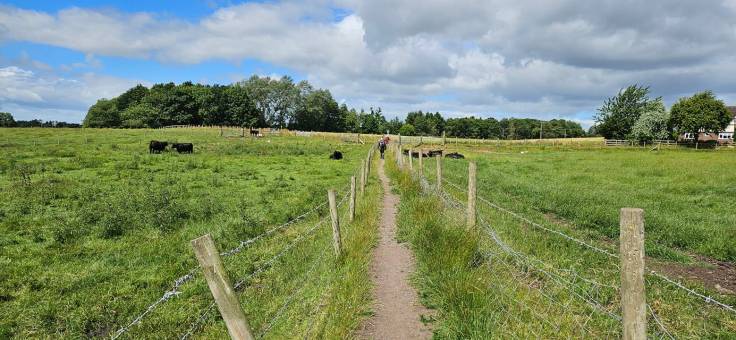
If you are not responsible for footpath maintenance on your land, suggesting these measures to the relevant authority would make sense. You know your land better than anyone, after all.
Returning to our original scenario – how useful do you think a sign saying ‘bull in field’ really is? It neither removes the danger nor offers an alternative. SURELY, WE CAN DO BETTER!

 Cattle Safety