Yes – cattle should be respected!

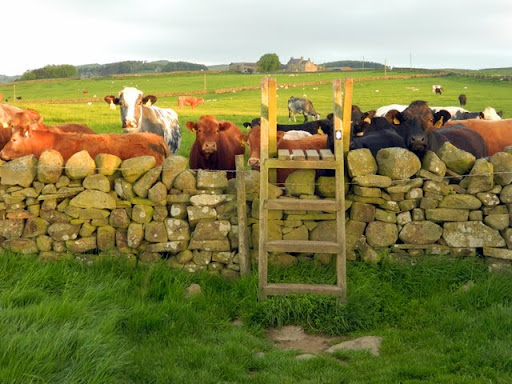
We should respect cattle – the fields are their home. But how do we do this when a public right of way exists?

Written by one of Killer Cows Team.

A recent television programme on ITV infuriated one of our reporters as we were told we should “respect cattle, the field is after all, their home”. The suggestion being that walkers were doing something wrong when they walk across fields.

Here is a clip of the TV programme on Instagram: https://www.instagram.com/brinkworth_dairy/reel/DCpkaAXocL-/

We have seen this sentiment with requests to not park on grass verges where sheep graze as it is “their lunch”, and similarly on fields where cattle graze. When there is no public right of way, or no right to roam, we can understand these requests and can comply with them.

But, there is a problem with introducing this concept into a field which does have a public right of way (PROW), or right to roam. We can respect the fact the cattle feel this is their space, and may feel they or their calves are threatened by walkers. Sometimes, cattle are simply inquisitive about someone in “their field”. But, we walkers have a right to walk along a public right of way, and we are unable to do anything reliable to stop cattle acting on that feeling in an aggressive or boisterous way.

Aggressive and boisterous cattle can result in serious injuries for the walker. We have many examples of walkers doing everything “right” and still getting injured.

The people who should be respecting cattle’s feeling of ownership of their field are their owners.

Farmers can either avoid placing cattle in fields with a public right of way (PROW), or provide a barrier to separate walkers from the cattle. By providing a barrier, they would be keeping walkers out of the cattle’s home. This is often done on the Continent with well applied electric fences to which the herd has been introduced.

The electric fence can be moved for grazing purposes where public footpaths cross the middle of a field.
If the path follows the edge of a field, the farmers can either fence it off, or offer a temporary alternative footpath on the other side of the hedge (accepting that this path would have to be temporary as a public right of way cannot be deliberately or permanently re-routed). If there is a long term plan to have cattle in a field with a right of way, then fencing is more appropriate than rerouting.

Image by Hedy81 from Pixabay

So, yes, let’s all respect cattle, and recognise the fact that they find walkers an intrusion into their domain. Farmers can solve this by providing fencing to separate cattle from footpaths, and so create a feeling of security for their animals.

Walkers should not have to pay the predictable price, or be blamed repeatedly, for farmers lack of respect for the security of their own cattle.


2024 Data Report: headlines

COWS probably hold more information about cattle attacks than any other organisation in the UK. We looked at our database and have brought you the headline figures.

As of July 2024, we have collected 889 cattle incidents in England and Wales, reported to us over the past 7 years, using our self-reporting online form. You can read the full 2024 Data Report here: Cumulative Data Report, 2024

Continue reading “2024 Data Report: headlines”

Can We Enjoy a Walk in the Countryside?

You may have heard Adrian Chiles’s radio programme discussing the safety of walking through fields of cattle, if not then head this way – Adrian Chiles – 04/04/2024 – BBC Sounds . Neither the animal behaviourist nor the representative from the NFU on the programme arrived at any conclusions about how we should behave to avoid being attacked by cows. So we ask the question – can we enjoy a walk in the countryside?

This all began because we love walking in our beautiful countryside – and it’s good for us.

The benefits of walking

Natural England has updated the Countryside Code, recognising the significant health and wellbeing benefits of spending time in nature. These benefits are important. England and Wales are blessed with a wonderful network of footpaths, allowing everyone access to our countryside so they can enjoy the benefits to both mind and body that walking in natural surroundings can bring.

But: Killer Cows have received over 800 reports of incidents in the countryside, these are from walkers who have either felt scared or been chased by cattle or, even worse, sustained injuries from cattle – some very severe. Many have been so affected they no longer feel safe enough to walk in the country and so have lost any benefit access to the countryside gave them.

So what do people suggest to do to keep safe?

Continue reading “Can We Enjoy a Walk in the Countryside?”

Cattle Attacks: Headlines from our Data Report

We have been collecting data since July 2017, using a self-reporting form on our website, and have amassed over 660 incidents involving walkers and cattle. Our data depends on victims finding our website and taking the time to fill in a form. It only represents the tip of the iceberg. Deaths and very serious injuries are often NOT reported, as either the victim or their family is too traumatised to relive their experiences.

Continue reading “Cattle Attacks: Headlines from our Data Report”

Killer cows and farmers

Nearly 50% of farmers report having been attacked by cows during calving.

In this article, Libby considers the risk to farmers from their cattle, and summarises the existing guidance.


Cattle: Farmers need to be aware of the dangers

In fact, it seems that they are more at risk than walkers.

From 2000 – 2015 there were 74 fatalities involving cattle recorded by HSE.

  • Eighteen of these fatal accidents have involved members of the public,
  • The remaining 56 have been fatal accidents involving farm workers.

Continue reading “Killer cows and farmers”

Farmer killed by her cow

We focus on walkers, but this death reminds us that farmers are at a much greater risk

IMG_0174

Another death

Sad news from Northern Ireland. Thelma Gorman, a respected cattle breeder, was found on her farm yesterday afternoon after an “incident” with a cow.

Sadly, despite the efforts of the air ambulance, she died at the scene. Continue reading “Farmer killed by her cow”

The trampling season: statistics on cow attacks

The commonly cited stats on cow attacks put the risk of being killed at nearly 3 billion to one. Not a very large risk, and so easily dismissed as insignificant.

But these statistics are fundamentally flawed. Find out why the risk is likely to be much larger, at around 35 thousand to one.

Read our opinion piece: AN ALTERNATIVE VIEW ON CATTLE ATTACK STATISTICS


Myth: There are 3 billion visits…

The 3 billion figure is used again and again. It is wrong. Just. Plain. Wrong.

Myth-busting: People make 3 billion visits to the English countryside every year

Err. No. They don’t.

This figure is used again and again, by official bodies, by journalists, and by other groups, but it is wrong. Just. Plain. Wrong.

Where does the 3 billion figure come from? It comes from the annual MENE surveys, which consistently show a figure of around 3 billion visits a year to outdoor spaces across England. Continue reading “Myth: There are 3 billion visits…”

Some facts and figures: When cattle attack…

What we can learn from 54 separate attacks by cattle on walkers.

Deaths and injuries to walkers caused by cattle – research findings.

Carri Westgarth and Marie McIntyre are both researchers from the University of Liverpool, and both have personal reasons to be interested in attacks by cattle. They recently completed a scoping exercise to determine the extent of the problem.

Looking for reports of cattle attacksWhat did they do? They searched newspaper reports published over a 20 year period, looking for reports of cattle attacks on walkers, including both deaths and injuries.
This is likely to be a huge underestimate of the true scale of the problem, because many attacks go unreported and unrecorded, but it’s a good start.

Here is a summary of their findings, published in 2016. They uncovered 54 separate attacks by cattle on walkers during the 20 year period. Continue reading “Some facts and figures: When cattle attack…”

Myth: Bulls chase the colour red.

Bulls don’t really care what colour you are wearing. Neither do cows.

“I’d advise not wearing red near bulls.”

Oh dear. You’ve been watching too many cartoons. This definitely is a myth.

Bulls don’t really care what colour you are wearing. Neither do cows. Cattle are virtually colour blind.

To be fair, there is some evidence cattle have limited colour receptors in their eyes, and might be able to distinguish red, although to them the colour red will look like a slightly different shade of grey.

It certainly isn’t true that bulls chase red objects and ignore the rest.

Then, why do they use red capes in a bull ring?

Bull holding a red cape and proving he is colour blindThe reason a bull will appear to chase a matador’s red cape in a bull ring, is because the animal is being threatened. He charges the thing he sees moving around. The cape.
The colour of the cape is irrelevant, as was demonstrated by using different colours in a Discovery Channel myth-busting experiment.

So bull’s don’t chase the colour red. There is really no need to keep repeating this myth. It’s just not true.

Neither will avoiding wearing the colour red keep you safe from bulls. That’s not true either.


Thank you to Pixabay for the images used on this page.
Header by OpenClipart-Vectors and cartoon by Clker-free-Vector-Images

Do you know your cattle?

Three useful links to help you identify cattle after an attack.

When reporting a cattle incident, you may be asked to identify which breed was involved. If you don’t know your Aberdeen Angus from your Whitebred Shorthorn, here are some useful sites to help you decide.

10 Native British Cattle Breeds

A selection of the ten most common native breeds in the UK, from the excellent Countryfile team.

How to identify cattle after an attack
10 Native British Cattle Breeds: and how to recognise them.

Rare and Native Breeds Cattle

18 common and rare breeds found in the UK, supplied by the Rare Breeds Survival Trust (RBST) with links to further information on each one.

rare breeds of cattle - identify your cows and bulls 
Rare and Native Breeds Cattle

List of Cattle Breeds – Wikipedia

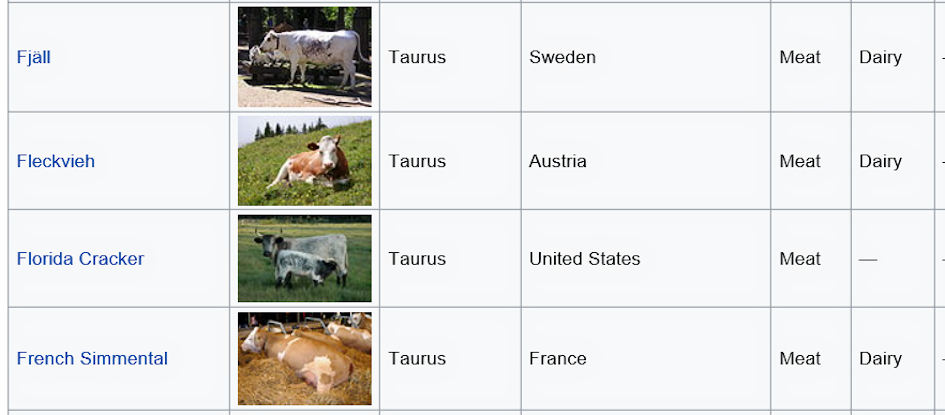
If you can’t find what you need above, Wikipedia lists 800 breeds of cattle, from around the world, including photographs of most of them.

wikipedia cattle index - to identify cows and bullsList of cattle breeds on Wikipedia

Don’t forget, you don’t need to be able to identify the breed before you report an incident to us, but it helps if you can.  Report an Incident here.


Featured photo credit: lydia harper