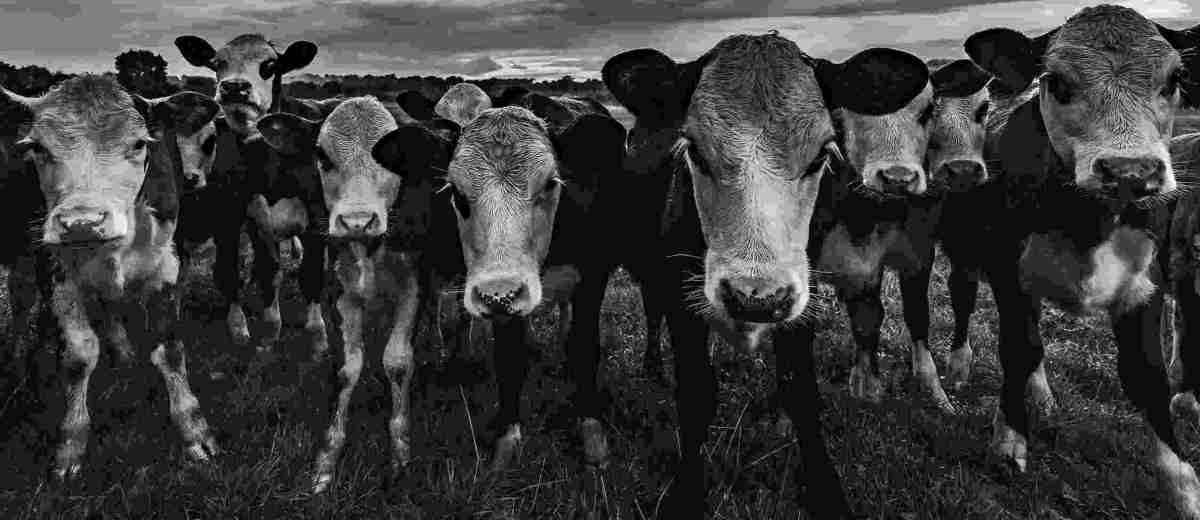
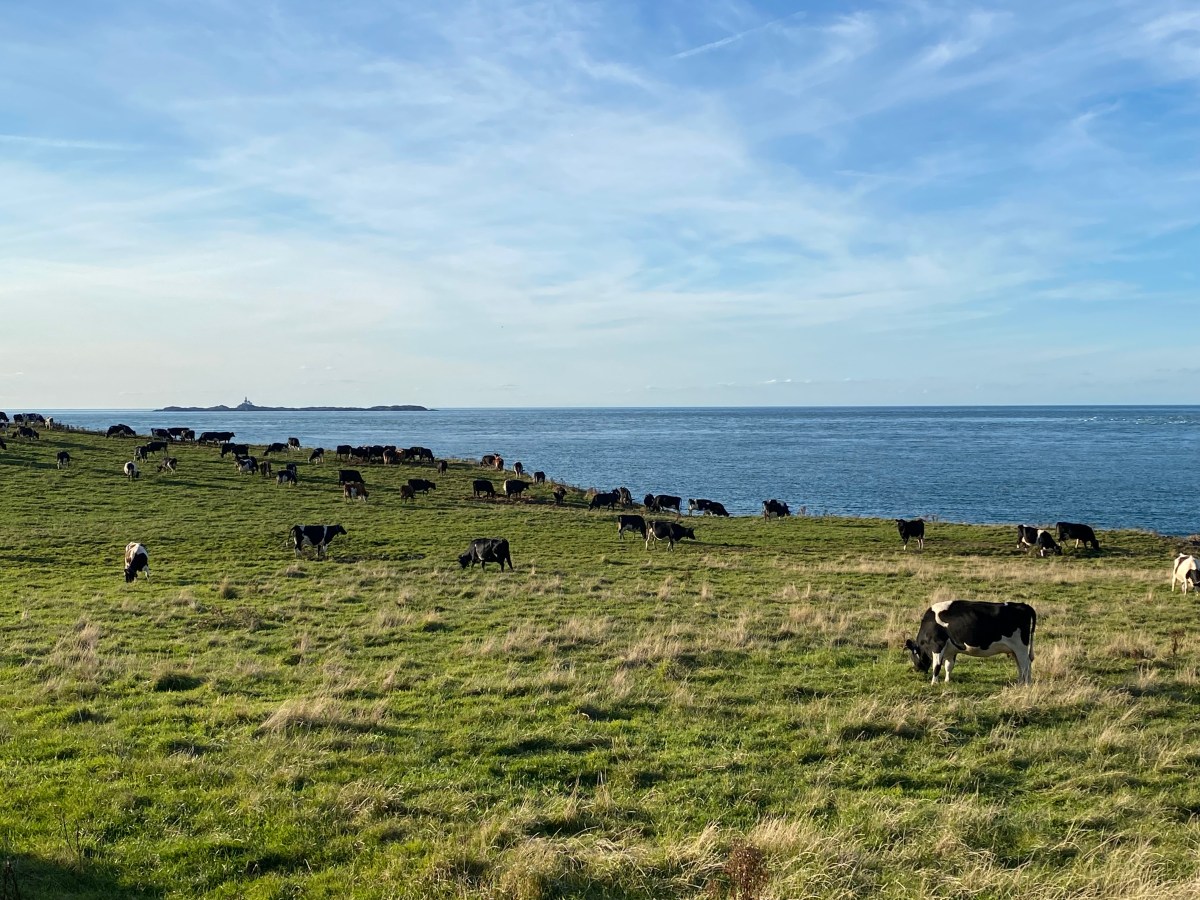
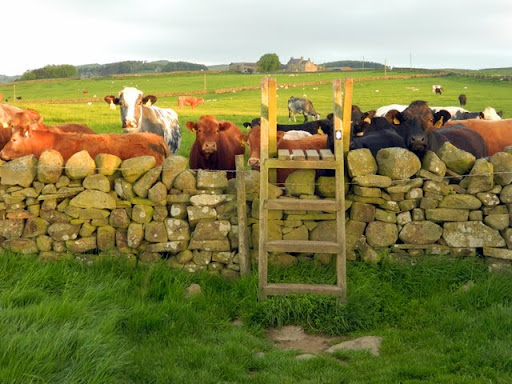
Cattle have been housed inside over the winter months so have been absent from our walks. In the spring when the weather gets warmer the grass starts to grow and the cattle can go back out into the fields. After the cattle have been housed indoors for a few months they are very excited about being allowed back out in the field so they run around doing laps of the field kicking their legs in the air.
So a reminder that your regular walks may now have cattle in the fields so be vigilant.
Also, like us (or not!!), they may be frisky in the Spring and exited to get back outside. They are large animals and unpredictable, so again be wary.
Spring also means calves which, although cute means that their mothers will be protective so keep clear and be wary
A horrible ordeal back in 2020. The people involved wish to remain anonymous due to the trauma they suffered
“We entered the field, a cow approached me from behind and pushed me to the ground, then the rest of the herd came up and attacked both myself and my husband leaving us badly injured. The group of cows that attacked us were a Stabiliser breed.
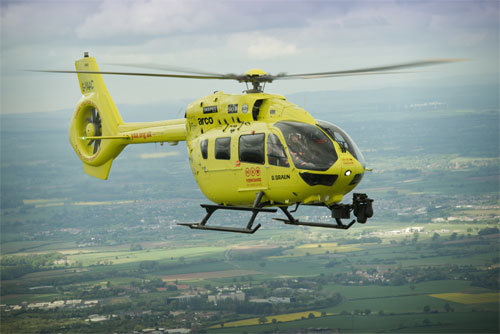
I had multiple broken ribs, a fractured shoulder, a collapsed lung, a haematoma on my head and lung, damaged nerves in my leg and PTSD. My husband was airlifted and I went by road ambulance.
This incident has been investigated by the HSE”
Our thoughts go out to this couple as we understand the ongoing trauma that they have suffered. If they wish to discuss this with anyone in our group please contact us via email (you did not leave us a contact email) or Contact – Killer Cows
COWS team are pushing to increase dialogue about our aims (notably the fencing off of footpaths from cattle) and since we live in different parts of England and Wales we are having zoom meetings to discuss our plans and talk about how to proceed.
So what are we doing?
We are notifying people that we now hold an excellent set of statistics on cattle attacks – and our experts should be called upon when asking how people can safely navigate a cattle field. We know cattle attacks are not rare and all near misses should be acted upon so a death or serious injury can be averted. We know that only separation of cows from walkers will keep walkers safe and cows unflustered.
Here’s where we’ve got to thus far –
1) We have sent a copy of our latest briefing (via email) to all senior coroners in England and Wales.
2) We are in the process of contacting (via email) major landowners with a copy of our latest briefing note and notification of any attacks or near misses that have occurred on their land. (This is tricky as we do not always know exactly who’s land the attacks occur on, but where we do know it is very useful information for the land owner.)
3) We are in the process of contacting organisations with sway in the farming world, eg: National Trust Board, The Ramblers, The Forestry Commission, HSE, with the above briefing report. We’ve also contacted the MP’s for agriculture and health and safety.
4) We are actively trying to use media channels to inform, but this is difficult as TV programmes seem to wish to use cattle “experts” who push the mainly useless advice of “respecting the cattle” and letting your dog go/or keeping it on a lead, depending where you are in the trampling process. We know from all your reports there is no safe way to walk through cattle (especially if you are alone or a couple) and dogs only feature in ½ of our reports (and the HSE’s)
5) Everyone who reports to us and agrees to us contacting them (and leaves an email address) is contacted by our team. This is to support those suffering from trauma and also to suggest/encourage them to also notify HSE and the landowner AND their MP – plus any other relevant sites. If we don’t notify them – they will continue to believe nothing needs to change. We also suggest that anyone injured sues the farmer – this is not encouraging money grabbing, many people are out of pocket with lack of salary, physio expenses, cost of necessary home help and need financial help.
6) Additional help is needed – We have many followers on Facebook, our website comes up very quickly now on an internet search, so we are getting more reports – it is wonderful that people are adding to our statistics (not so wonderful that attacks happen though) – more reports = more work for our team, so it would be great to have another member on our team just so when one of us feels a bit poorly, or wants to go on holiday we can without loosing our groups momentum. Send us an email if you can help cows.safety.group@gmail.com
7) You don’t have to be a core group member of COWS to help – here is a link to our latest briefing report https://killercows.co.uk/wp-content/uploads/2024/10/oct-2024-cows-data-report-1.pdf and if you know anyone suffering a near miss or attack, then send the landowner this plus notice of the attack and suggest they fence off their cattle.
Response ID 311,528,935 Incident number 1069 Date: 18.12.24 Site: Billingshurst, West Sussex. On a bridleway passing through woodland immediately north of the railway line, east of Rowfold Farm No dog
Kathy’s account: “I was walking along the bridleway, which passed through an area of woodland, with a field of cows immediately east of it. There was a wire fence between me and the herd along part of the edge of the woodland, but part was open to the field. As soon as I came within sight of the animals there was some deep bellowing. Not like an ordinary mooing. I walked maybe 50metres further up the stretch of woodland, keeping an eye on the animals, because the bellowing got deeper and more animals were calling out to each other. It felt very threatening. Then I realised that there were several cows in the woodland, a couple very big, and that even the field I was aiming for to the top left of the woodland had the same cows in it, and they were all looking at me and moving towards me, making the deep bellowing noises. So I turned back the way I had come and found an alternative route. There is no doubt in my mind that had I carried on, they would have attacked me. The ground was very muddy and it would have been difficult to escape quickly.”
Kathy comments: “A public footpath is a PUBLIC footpath and it’s the responsibility of the landowner to protect users from avoidable harm.”
John’s account: “I was walking alone on a planned circular route, starting and ending at Cliffe. A few hours into the walk I was heading westward, to my left there was a steep earth bank leading to a concrete (or stone) sea wall. Beyond the sea wall was the south bank of the Thames Estuary. I passed a couple with a large dog who were heading in the opposite direction. We exchanged greetings and continued on our way. Shortly afterward, perhaps 10 minutes later, I encountered a small herd of cows. I estimate 10 to 15 of them. The cattle were stationary, with some sitting and others standing. I do not recall seeing any calves. Having previously experienced charging by a large herd of castrated bulls a couple of years before, I was cautious, moving calmly but staying alert. The cows did not trouble me but one cow did begin to walk towards me after I’d passed the group. However, after some moments it stopped. Given that the couple I’d passed earlier did not mention the cows, and the cows hadn’t behaved in an overtly threatening manner, I figured the cows were likely not troublesome. Nonetheless I reserved some wariness.
My walk progressed, however the circular route I had planned was not waymarked, and this return route passed over wetland, and I didn’t want to risk losing time due to not being able to find suitable crossing points over the various water features. With about 90 minutes of daylight left I made the decision to return to Cliffe the way I came, a much longer route but at least it was clear. I had a headtorch and plenty of food and water, and spare layers and so was not so concerned about walking in the dark.
At the What3Words location provided in this report, I encountered the cows again. They were now moving in a single file approaching me. Not wanting to get too close to them, I stood away from the path, and walked partially up the earth bank that adjoined the sea wall. The lead cow stopped and looked at me, then continued to walk along the path. For a moment I thought all was well, but then the cow started to walk towards me. Fortunately there was a short ladder near me, that I could use to climb over the sea wall. I climbed up a few rungs of this ladder to put some more distance between me and the approaching cow. The cow continued to approach; it had left the path and was now walking up the earth bank. 2 or 3 other cows now also began heading towards me in the same manner. I then climbed onto the top of the sea wall. The cows continued to move up the steep earth bank and now began mooing. I shouted at them and banged my walking sticks together to try and scare them off, but this did not deter them. It was at this point I decided to climb over the sea wall onto the side facing the Thames Estuary and began walking along it. I eventually found another ladder and climbed over over the wall; there were no cows in sight and I continued my way back. It infuriates me this was been my second encounter with aggressive cows on a public right of way. I had a lucky escape. Had I not been near that ladder the outcome could have been different.”
John comments: “Thank you for providing a forum highlighting the issue of aggressive cows, there needs to be more awareness of this issue.”
Response ID 311,461,278 Incident number 1067 Date: 26.10.24 Site: Oswestry. Followed route 4 of the ‘Offa’s Dyke Path Circular Walks’ issued by ‘Offa’s Dyke Path National Trail’ and ‘Shropshire Council Outdoor Recreation’. The incident happened by Gwalia Wood which is point 8 on the route map at about 15:45. 2 walkers, no dog
Roger’s account: “We emerged from Gwalia Wood and went into the field where cows were grazing and actually moving away from us on the far side of the field. After walking just a short distance on a diagonal away from the cows and toward the sign posted exit point, we noticed that several of the cows had spotted us and had turned and were now running toward us closely followed by the rest of the herd (probably numbering about 50 animals). At the speed the cows were running we would not be able to retrace our steps the way we had come. I told my wife to run to our left and toward a closed metal vehicle gate. We reached the gate just as the first cow got to within 10 feet of us and I turned and started shouting and waving my arms to drive them back. This action stopped them long enough to allow us to climb the gate and exit the field before they came crowding around the gate. We followed a farm track, circling the wood back to where we had originally been and eventually getting back onto the published route at the hamlet of Bwlch.” “My wife was in a terrible state, physically shaking and suffering from arthritis in her knee which after running and gate climbing meant she was in considerable discomfort walking back. We discussed the incident that night in the bar of an Oswestry hotel where we dined and were told by a local that the cows in question were well known for pursuing walkers.”
Roger adds: “The public footpath across the field where we encountered the cows is on a diagonal and on a right to left slope. The ground was very soft and we were effectively on the receiving end of a cavalry charge. It would help if the ‘tourist maps/leaflets’ make mention of the possibility of encountering livestock and to provide clear alternative routes where appropriate.”
Roger supplied the photograph of the herd at the gate following the incident.
Response ID 311,460,084 Incident number 1066 Date: 14.10.24 Site: Anglesey Coastal Path from Cemlyn Bay to Carmel Head – Llanfairynghornwy near Carmel Head. Type of cow: Group of Cows: Freisian dairy No dog
Roger’s account: “A group of us were walking the Anglesey Coastal path, we were watching seals with pups on the beaches below. Having spent some time watching a mother seal and her pup, we started to make progress towards Carmel Head only to find a recently milked herd of cows making their way onto the headland by Porth Newydd at around 16:35. The herd consisted in excess of 100 cows and these were extremely frisky (jumping on each other’s backs) and moving quickly. The farmer had placed feed in numerous areas both on and to the seaward side of the Coastal Path in an apparent attempt to encourage the cattle to deter users of the path (this practice has been apparent in previous years but with no cattle present on previous walks). The cattle quickly approached us with some of the cows breaking into a run. It was only because of a ditch that we were able to retreat back across and exit the field through a gate that we’d entered through that we were able to escape their attention. The alternative of a 200 metre sprint to exit the field on the far side was never considered to be practical.”
Roger comments: “Placing cattle food on the coastal path to deter walkers appears to be ‘common practice’, it certainly is not an isolated occurrence. I would like to see the Coastal Path and headland in this area fenced off from the grazing area, as one section of the path we walked earlier, near Hen Borth.”
Roger supplied the photograph of the cows beginning to fill the field.
Response ID 311,442,303 Incident number 1064 Date: 30.11.24 Site: Davenham, ///birds.intruders.storm Type of cow: Group of bullocks Dog: On lead at beginning of the incident.
Account: “I was walking with my 5 year old daughter and our Jack Russell terrier along a public footpath through the field. A cow started bucking it’s back legs and snorting at us. I told my five year old to run to the gate and I dropped the dog lead to run behind her. We managed to escape unscathed that day but it was an incredibly scary experience and I now avoid that field if the cows are present. I don’t think cows should be allowed on fields with footpaths.”
Response ID 311,395,124 Incident number 1062 Date: 23.04.24 Site: Malvern Hills AONB free access area No dog
Helen’s account: “A single cow was scratching its head on a public seating bench in the Area of Outstanding Natural Beauty (AONB) free access area. I assumed it would be docile in an area where people are invited to sit. I went to take a photo of the cow from about 10-15 feet away, and as I pressed the shutter it was upon me and head butted my left arm & ribcage. My arm was thrown, thankfully I remained upright. The cow left me alone after that and I hastily left the field.”
“Subsequently my left ribcage was very painful to lie on. I attended A&E and they diagnosed possible broken ribs and torn ligaments.”
Additional comment by Helen “Later that day I saw other people taking photos of their friends standing by cows, so I’m not the only person who assumed they would be safe in an area of open access and designated AONB.”
Incident number 1063 Response ID 311,396,400 Public Right of Way: Y Date: 26.08.24 Site: Hawkshead, Cumbria
Julia Dixon has written this account: “We were walking along a public footpath when my husband was butted by a cow with a calf who approached from the middle of the field. He was pushed into the fence and bruised. The cow also butted the dog who fell over and the cow went to try and crush our dog with its head. My husband kicked the cow to save the dog, and luckily the cow backed off. My husband escaped with minor cuts and bruising.
I wanted to contact the farmer and local people as this is a well used footpath, but I did not know who I needed to contact. The footpath leads directly into Hawkshead Village which is full of tourists in summer.”
Julia adds a list of suggestions that would improve safety (Killer Cows agree with her) –
*Fencing – even electric fences which are portable and very cheap to install and run. We use them for horses.
*Footpaths could be diverted around the edge of the field of the field if necessary where they usually run through the middle.
*Warning on the gate and phone number for farmers.
*Proper recording for incidents with farmers liable.
Incident number 1061 Response ID 311,395,044 Date: 1.11.24 Site: ///remit.page.code
It happened on a public foot path off the allotments in Upton St Leonards Village in Gloucestershire
Account: We entered the public footpath via the gate from the allotments. My 7 year old daughter and I and our dog on the lead started walking along the path. Within seconds of being in the field however the group of cows at the far end of the field (complete opposite side to where the public footpath is) started charging at us. Knowing the dangers of cows I quickly grabbed hold of my daughter and threw her back over the gate. In a state of panic I struggled to open the gate, only just opening it as the cows were right on top of me. I got through and closed the gate with the dog before they could cause any harm. It left my daughter in floods of tears from fright, she is now terrified of cows (and she is an animal lover) she had nightmares that night from it. We have not used that public footpath again from fear.
Mum comments: Warnings should be put on gates if there are cattle in fields that have public footpaths through them.
We should respect cattle – the fields are their home. But how do we do this when a public right of way exists?
Written by one of Killer Cows Team.
A recent television programme on ITV infuriated one of our reporters as we were told we should “respect cattle, the field is after all, their home”. The suggestion being that walkers were doing something wrong when they walk across fields.
We have seen this sentiment with requests to not park on grass verges where sheep graze as it is “their lunch”, and similarly on fields where cattle graze. When there is no public right of way, or no right to roam, we can understand these requests and can comply with them.
But, there is a problem with introducing this concept into a field which does have a public right of way (PROW), or right to roam. We can respect the fact the cattle feel this is their space, and may feel they or their calves are threatened by walkers. Sometimes, cattle are simply inquisitive about someone in “their field”. But, we walkers have a right to walk along a public right of way, and we are unable to do anything reliable to stop cattle acting on that feeling in an aggressive or boisterous way.
Aggressive and boisterous cattle can result in serious injuries for the walker. We have many examples of walkers doing everything “right” and still getting injured.
The people who should be respecting cattle’s feeling of ownership of their field are their owners.
Farmers can either avoid placing cattle in fields with a public right of way (PROW), or provide a barrier to separate walkers from the cattle. By providing a barrier, they would be keeping walkers out of the cattle’s home. This is often done on the Continent with well applied electric fences to which the herd has been introduced.
The electric fence can be moved for grazing purposes where public footpaths cross the middle of a field. If the path follows the edge of a field, the farmers can either fence it off, or offer a temporary alternative footpath on the other side of the hedge (accepting that this path would have to be temporary as a public right of way cannot be deliberately or permanently re-routed). If there is a long term plan to have cattle in a field with a right of way, then fencing is more appropriate than rerouting.
So, yes, let’s all respect cattle, and recognise the fact that they find walkers an intrusion into their domain. Farmers can solve this by providing fencing to separate cattle from footpaths, and so create a feeling of security for their animals.
Walkers should not have to pay the predictable price, or be blamed repeatedly, for farmers lack of respect for the security of their own cattle.










 Cattle Safety